Small-Space Cat Setup Guide
As an Amazon Associate I earn from qualifying purchases.
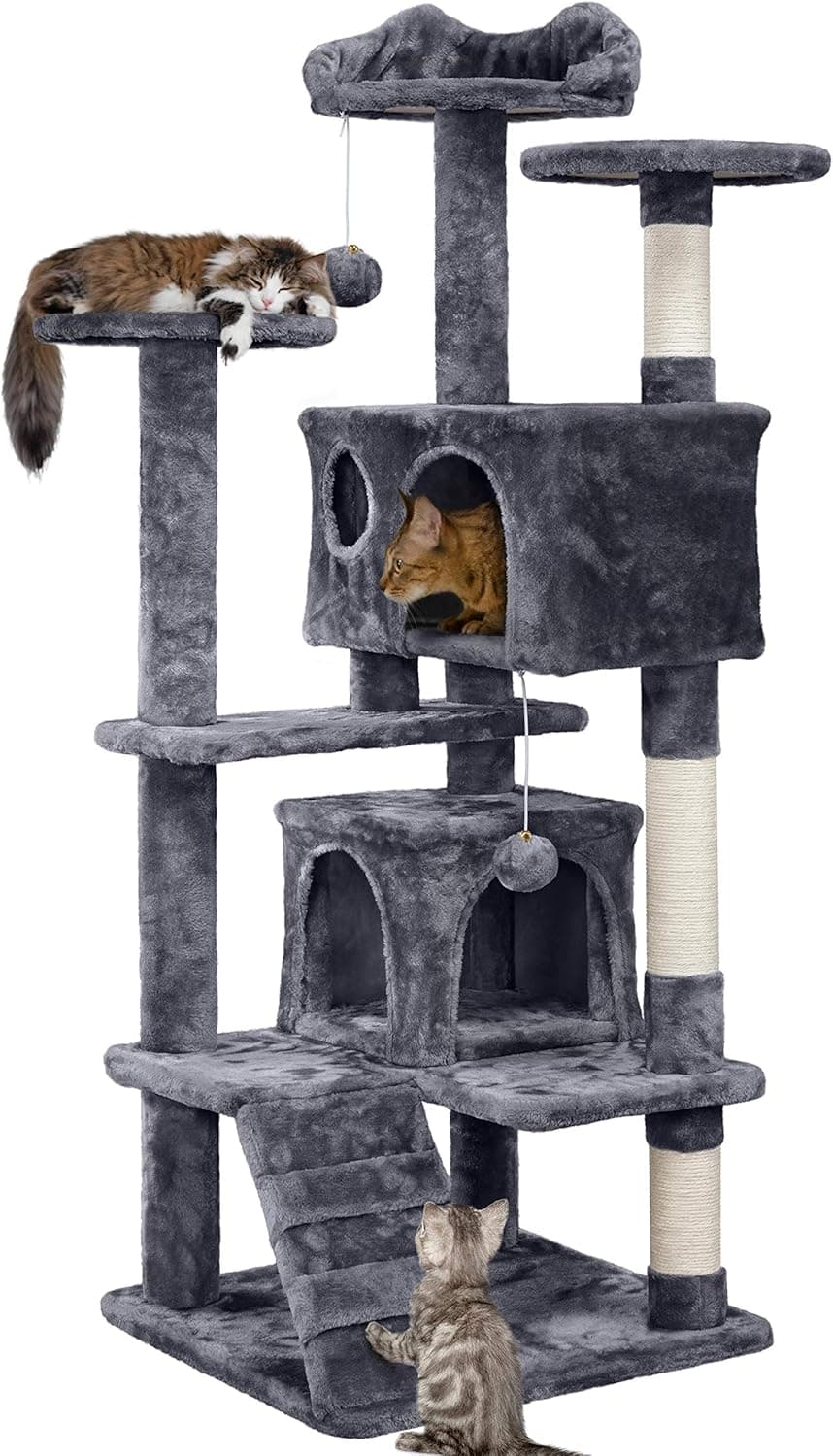
Cats and small apartments are a natural match, because a cat's world is about territory and height more than square footage. The secret is building upward and choosing gear that does double duty. This guide covers every zone your cat needs in a compact home.
Build Up, Not Out, for Territory
In a small apartment your floor is precious, but your walls and vertical air are wide open, and that is exactly the space a cat wants most. Height gives a cat lookout perches, escape routes, and separate zones that make a studio feel like a much bigger territory. Thinking vertically is the single biggest mindset shift for setting up a cat in a small home.
A tall cat tree with multiple levels delivers climbing, perching, and napping in one narrow footprint. Place it near a wall so it feels stable, and choose a slim vertical design over a wide sprawling one. That single piece of furniture can replace several floor-hogging accessories at once.
Give the Window a Job
For an indoor cat in a small space, a window is entertainment, exercise, and stress relief rolled into one. Watching birds, movement, and changing light keeps a cat mentally engaged during the long hours you are away, and it does all of this without taking up an inch of floor. Every apartment cat deserves a proper window spot.
A mounted window perch turns unused glass into a prime nap-and-watch station and frees the floor completely. Pick a sunny window your cat already gravitates toward, make sure the mount is rated for your cat's weight, and you have added a whole activity zone to a room without shrinking it.
Contain the Litter Zone Cleanly
Litter is the trickiest part of a small-space cat setup, because the box has to share a room you also live in. The goal is containing both odor and scattered litter so the box blends into the home rather than dominating it. Get this zone right and a cat in a studio stays completely pleasant to live with.
An enclosed box controls smell and stops litter from spreading across a small floor, and many designs double as a low side table or tuck neatly into a corner. Give it a quiet, low-traffic spot with a little airflow, and keep it away from the feeding station, since cats dislike eating next to their bathroom.
Protect Your Furniture From Claws
Scratching is not optional for a cat, it is how they stretch, mark territory, and shed claw sheaths. In a small apartment your furniture is right there and irresistible, so the answer is never to stop the scratching but to redirect it onto something better than your couch arm. Give a cat a legitimate target and your furniture is spared.
A sturdy scratching post that does not tip over, placed right next to the furniture your cat already targets, wins the battle fast. Cats prefer a post tall enough for a full stretch and stable enough to lean into. Offer both a vertical post and a horizontal option to cover different scratching styles.
Set Up Food and Water for a Solo Day
Cats graze and often live alone in an apartment while you work, so the feeding station should keep food and water fresh and available without you standing over it. A well-planned food zone keeps a small-space cat healthy and hydrated through long stretches on their own, and keeps that corner from turning into a smell source.
A circulating water fountain keeps water fresh and encourages the drinking that cats, prone to under-hydrating, tend to skip from a still bowl. Pair it with an automatic feeder for controlled portions on a schedule, tuck both into a corner away from the litter box, and your cat's day runs smoothly whether you are home or not.