How to Introduce a Cat and a Dog in a Small Apartment
Published How we research

Introduce a cat and a dog slowly, in stages: separate rooms first, then scent swapping, then barrier meetings, and only later supervised time together. In an apartment the plan works the same way, but you need to create separate zones, a barrier you can see through, and high places for the cat before the animals ever meet. This guide walks through each stage and the gear that makes a small space workable.
Products from this article
The highest-scoring picks from the buying guides this article links to. Scores are our editorial assessment, not customer ratings.
+ Walk-through door lets people pass without stepping over
From our guide: Best Pet Gates for Apartments and Renters
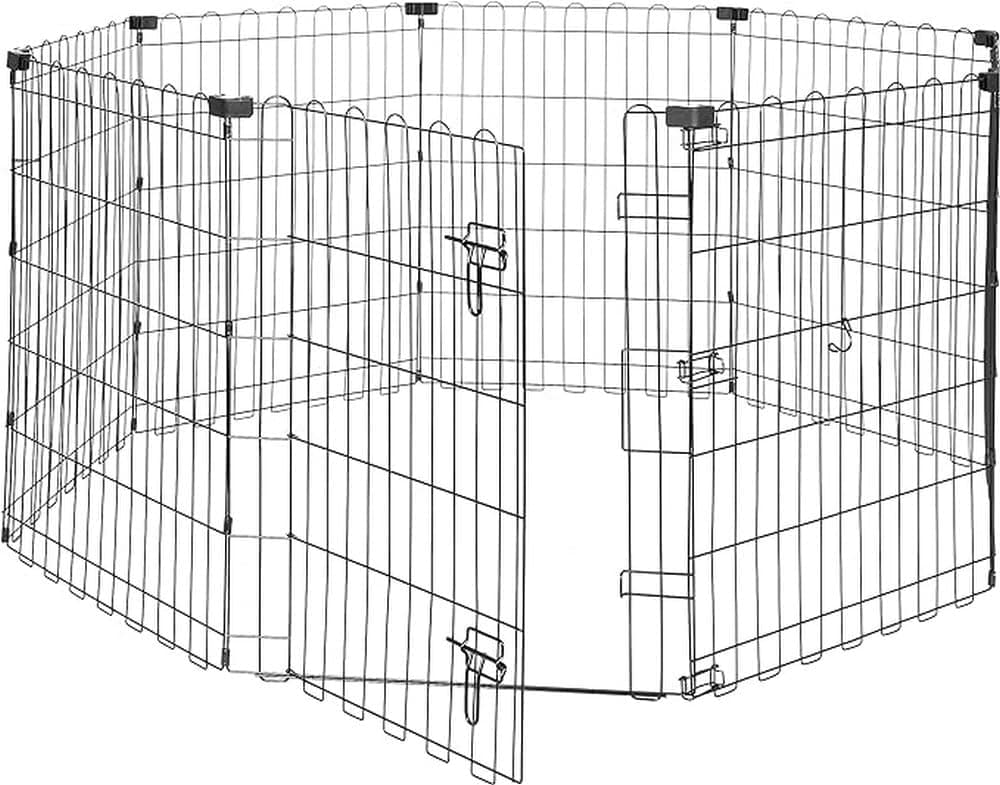
+ 8 metal panels form a secure pen or can be reshaped along walls
From our guide: Best Pet Playpens for Small Apartments
+ Pitched at large cats, so platforms are sized for bigger bodies
From our guide: Best Cat Wall Shelves
+ 6 Refills keep the diffuser running for months without reordering
From our guide: Best Cat Calming Diffusers



Before the animals meet: set up the space
In an apartment you cannot give two animals separate wings, so the first job is to divide the space you have. Pick one room, usually a bedroom or bathroom with a door that closes, as the new animal's base. It needs food, water, a litter box or potty spot, and a bed. If the newcomer is a cat, keep the litter box and food well away from where the dog can reach; a dog eating cat food or raiding the litter box is the most common early conflict.
Plan your barriers now, not on the day. A door that closes is the best barrier, but you also want a way to let the animals see each other without touching. A tall pet gate or a playpen works well for that, because both animals can sit on opposite sides and look, sniff and ignore each other at their own pace. Choose a gate tall enough that the dog cannot jump it and check the cat cannot be squeezed through a gap if she is small.
Swap scents for the first few days
Cats and dogs learn about each other through smell long before they care about sight. For the first several days keep them apart and trade scents: rub a clean sock or small towel on one animal and leave it near the food bowl of the other, then reverse it. You can also swap their bedding for an hour or two or let each animal explore the other's room while the resident is shut elsewhere.
Watch the reaction rather than a calendar. Relaxed sniffing, ignoring the item or eating nearby is a good sign. Growling, hissing, hiding or refusing food means the animal needs more time at this stage. There is no fixed number of days that works for every pair, and a slow start usually saves time later.
First sight: gate or crate, leash on, calm voices
For the first visual meeting, put a barrier between them: a gate in a doorway, or the dog on a leash with the cat free to leave. Start with a short session while both are calm, ideally after the dog has had a walk and some exercise. Give treats to the dog for looking at the cat and then looking back at you, and let the cat watch from a distance with an exit route.
Keep sessions short and end them while things are still going well, before either animal tenses up. Repeat once or twice a day. If the dog fixates, stiffens, stares or lunges, increase the distance, ask for a simple cue such as sit or a hand target, and reward any moment of attention back to you. A dog that cannot disengage yet is not ready for a closer meeting.
A calming aid can help the nervous animal settle between sessions, especially in a small home where there is nowhere to retreat from the noise of the other. Comfortable hiding spots matter as much as any product.
Give the cat height and an escape route
The single most useful change in a small apartment is vertical space for the cat. A cat that can climb above dog level feels in control, and a cat that feels in control is far less likely to bolt, which is what triggers a dog's chase instinct. Wall shelves, a tall cat tree or a window perch all give her somewhere to watch the dog from a safe spot.
Make sure the route up is clear of furniture the dog could block and that there is more than one way out of each room. Never corner either animal. Put the cat's food, water and litter box up high or behind a barrier the dog cannot pass, such as a gate with a cat-sized gap, or in a room the dog is kept out of.
Supervised sharing of the room
Once both animals are relaxed on either side of a barrier, try short supervised sessions in the same room with the dog on a leash. Let the cat approach or leave as she chooses. Reward calm behavior from the dog and keep the leash loose so you are not signalling tension through it. Drop the leash only when the dog reliably ignores the cat, and keep it trailing for the first few sessions so you can step on it if needed.
Do not leave them alone together until you have seen weeks of calm behavior, and even then separate them when you are out. A closed door or a crate for the dog while you are away is a reasonable apartment routine, and it protects both animals while you are not there to step in.
Signs that it is going well, and signs to slow down
Good signs include loose, wiggly body language, play bows between a confident dog and cat, the cat sitting near the dog, and both animals eating and using the litter box normally. Brief, mild hissing or a swat from the cat as a boundary is normal communication and does not by itself mean the introduction has failed.
Slow down if the dog stalks or chases, if the cat hides for most of the day, stops eating or avoids the litter box, or if either animal shows prolonged freezing or flattened ears. Go back one stage, shorten sessions and increase distance. A cat that suddenly stops using her litter box is stressed, and if it continues or you see signs of illness, talk to your veterinarian. For persistent aggression, a qualified trainer or behaviorist experienced with cats and dogs is worth the cost.
Frequently asked questions
How long does it take for a cat and dog to get along? It varies a lot by individual animals. Some pairs settle in days, others take weeks or months, and a few only reach polite tolerance. Let the animals set the pace and move on only when the current step is calm.
Should the dog be on a leash for the first meeting? Yes, in most homes. A leash or a gate gives you control without needing to grab either animal, and it lets the cat leave when she wants to. Pair the leash with treats so the dog learns that calm behavior near the cat pays off.
Is it easier if one of the animals is a puppy or kitten? Not necessarily. Young animals can be more adaptable, but a puppy can be too rough for a cat and a kitten can be too bold for an anxious dog. Supervise every interaction either way.
Where should the cat eat in a small apartment? Somewhere the dog cannot reach: a high surface, a room behind a gate, or a spot only the cat can access. Eating undisturbed makes a big difference to how safe she feels around the dog.
Popular right now
- Best Enclosed Litter Boxes for Apartments (2026 Guide)Buying guide
- Crate training explainedGlossary
- How to Handle Dog Barking Complaints in an ApartmentArticle
- Best Pet Odor Eliminators for Apartments (2026 Guide)Buying guide
- Litter Box Placement Ideas for Small ApartmentsArticle
- Best Cat Scratching Posts for Apartments (2026 Buyer Guide)Buying guide
Based on the last 28 days of search and visitor data.