Why Your Cat Ignores the Scratching Post and Scratches the Sofa
Published Updated How we research
Scratching is normal cat behaviour. It keeps claws healthy, stretches muscles and leaves scent marks that tell the cat an area is theirs. When a cat ignores a new post and keeps working on the sofa or a rented carpet, the post is usually wrong in size, texture or position rather than the cat being stubborn. Small changes usually move scratching to the right place within a few weeks.
Products from this article
The highest-scoring picks from the buying guides this article links to. Scores are our editorial assessment, not customer ratings.
As an Amazon Associate we earn from qualifying purchases. This does not change our picks. Affiliate disclosure
New to Prime? Try Prime free for fast, free shipping on eligible items.
+ 33.6" tall post gives adult cats real reach for vertical scratching
From our guide: Best Cat Scratching Posts for Apartments (2026 Buyer Guide)
+ Fits over squared furniture arms, placing scratching right where cats already go
From our guide: Best Cat Scratching Furniture
+ Clear caps look natural, so they barely show on light or dark paws
From our guide: Best Cat Nail Caps to Protect Furniture
+ FELIWAY Classic is the best-known cat pheromone brand
From our guide: Best Cat Calming Diffusers
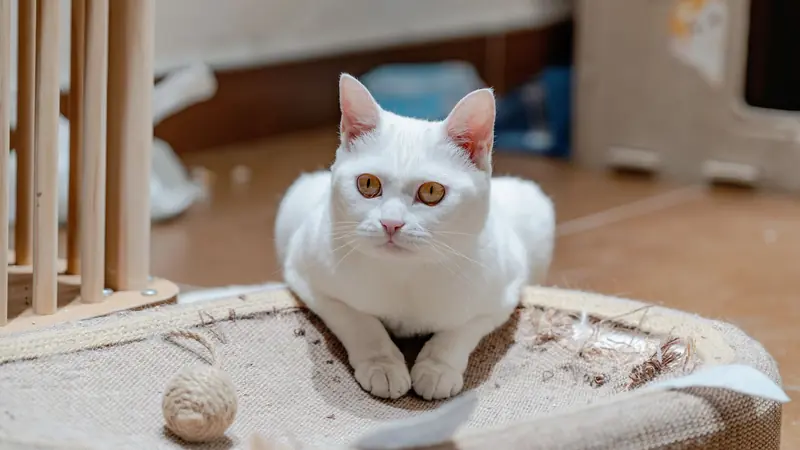
Why cats choose furniture over the post
Sofas and armchairs are heavy, stable and tall, and they sit in the middle of the room where the family spends time. A cat scratching the side of a couch gets a full-body stretch against something that never wobbles, and marks a spot everyone passes, which is exactly what a scratch mark is meant to do.
Many posts sold in pet stores are short, light and covered in soft carpet. If a post tips when the cat leans on it or is too short for a full stretch, most cats try it once and go back to the furniture. Carpet-covered posts can also teach cats that carpet is for scratching.
Get the right post
Choose a post tall enough for your cat to stretch fully with front legs extended, usually at least 30 inches (76 cm) for an adult cat. The base should be wide and heavy so the post does not move at all when the cat pulls on it.
Sisal rope and sisal fabric suit most cats because they shred satisfyingly. Some cats prefer horizontal scratching, which shows up as damage on rugs and carpet rather than the sides of furniture, and these cats do better with flat cardboard scratchers or angled ramps.
Put it where the damage happens
A post hidden in a corner or a spare room rarely gets used. Place the new post directly in front of or beside the piece of furniture your cat scratches, even if it does not look ideal, and add scratchers near sleeping spots, since most cats scratch right after waking up.
Once the cat is reliably using the post, you can move it gradually, a few inches every few days, to a more convenient spot. In small apartments, wall-mounted and door-hanging scratchers give extra scratching places without using floor space.
Make furniture less appealing
While the cat learns, cover the targeted areas temporarily with double-sided sticky tape designed for furniture, a fitted throw or clear furniture guards. Cats dislike the sticky texture and will look for somewhere better to scratch, which should be the post right next to it.
Clean the scratched areas with an enzymatic cleaner to reduce scent marks. Avoid punishment, spraying water or shouting, which increases stress and can make scratching and marking worse rather than stopping it.
Reward and maintain
Rub catnip or silvervine on the post, use a teaser wand around it and give a treat or praise when your cat scratches there. Positive associations make the post the most interesting scratching spot in the home.
Trim claws every couple of weeks to reduce damage while the habit changes, and consider soft nail caps if a rental deposit is at stake. Replace sisal covers when they are fully shredded, since some cats abandon posts that have worn smooth.
Quick answer: how to keep a cat from scratching furniture
Give the cat something better to scratch right next to the furniture, make the furniture temporarily unpleasant, and keep claws trimmed. All three together work far better than any single fix, and most cats change their habit within two to six weeks if the replacement is tall, stable and covered in sisal.
The order matters. Put the post or scratcher in place first, then add deterrents to the sofa. Taking away the furniture target before the cat has an alternative just moves the scratching to the next piece of furniture.
Protecting a sofa or rental while the habit changes
Furniture guards are clear plastic sheets or fabric panels that cover the scratched corner or arm. Double-sided sticky tape made for furniture does a similar job on flat surfaces. Both stay on for a few weeks, then come off once the cat uses the post consistently.
Soft nail caps are the most direct protection for a rental, because they cover the claw instead of the sofa. They are glued on, need replacing roughly every four to six weeks as the nail grows out, and work best on cats that tolerate paw handling. Pair them with regular trimming rather than using them as a permanent fix.
Stress can also drive scratching, since scratching leaves scent marks. If a cat scratches more after a move, a new pet or a change in routine, a pheromone diffuser plus more play sessions can help alongside the physical fixes. Declawing is not a solution: it is an amputation of the last toe bone, and it can cause lasting pain and behavior problems.
Popular right now
- Best Enclosed Litter Boxes for Apartments (2026 Guide)Buying guide
- Crate training explainedGlossary
- How to Handle Dog Barking Complaints in an ApartmentArticle
- Best Pet Odor Eliminators for Apartments (2026 Guide)Buying guide
- Litter Box Placement Ideas for Small ApartmentsArticle
- Best Cat Scratching Posts for Apartments (2026 Buyer Guide)Buying guide
Based on the last 28 days of search and visitor data.